
Insights
Discover new findings, thought leadership, and insights about what working learners need—and what their experiences can teach us about building a postsecondary system that works for today's learners.

Gallup + College Futures
2026 State of California Learners Report
New research from College Futures Foundation and Gallup explores what California learners value in postsecondary education, what they expect, and what gets in the way—especially for adults balancing education with work, caregiving, and everyday life.

California Education Lab + College Futures
Opportunity to Improve: Financial Aid for Adult Learners in California Community Colleges
Financial aid can play a critical role in helping adult learners overcome the costs of college. This brief examines the financial aid programs available to adult learners in California’s community colleges, including patterns of application, eligibility, and receipt. It identifies gaps and structural barriers that can prevent eligible students from accessing aid and highlights opportunities to better support adult learners through financial assistance.

California Education Lab + College Futures
Effects of the Cal Grant Community College Entitlement on Adult Learners
Expanded financial aid can make a meaningful difference in helping adult learners succeed in college. This brief examines the effects of the Cal Grant Community College Entitlement Award, which expanded access to financial aid for California Community College students more than a year out of high school. Its findings demonstrate the potential of targeted financial aid to improve outcomes for adult learners and advance California’s postsecondary attainment goals.
California Competes
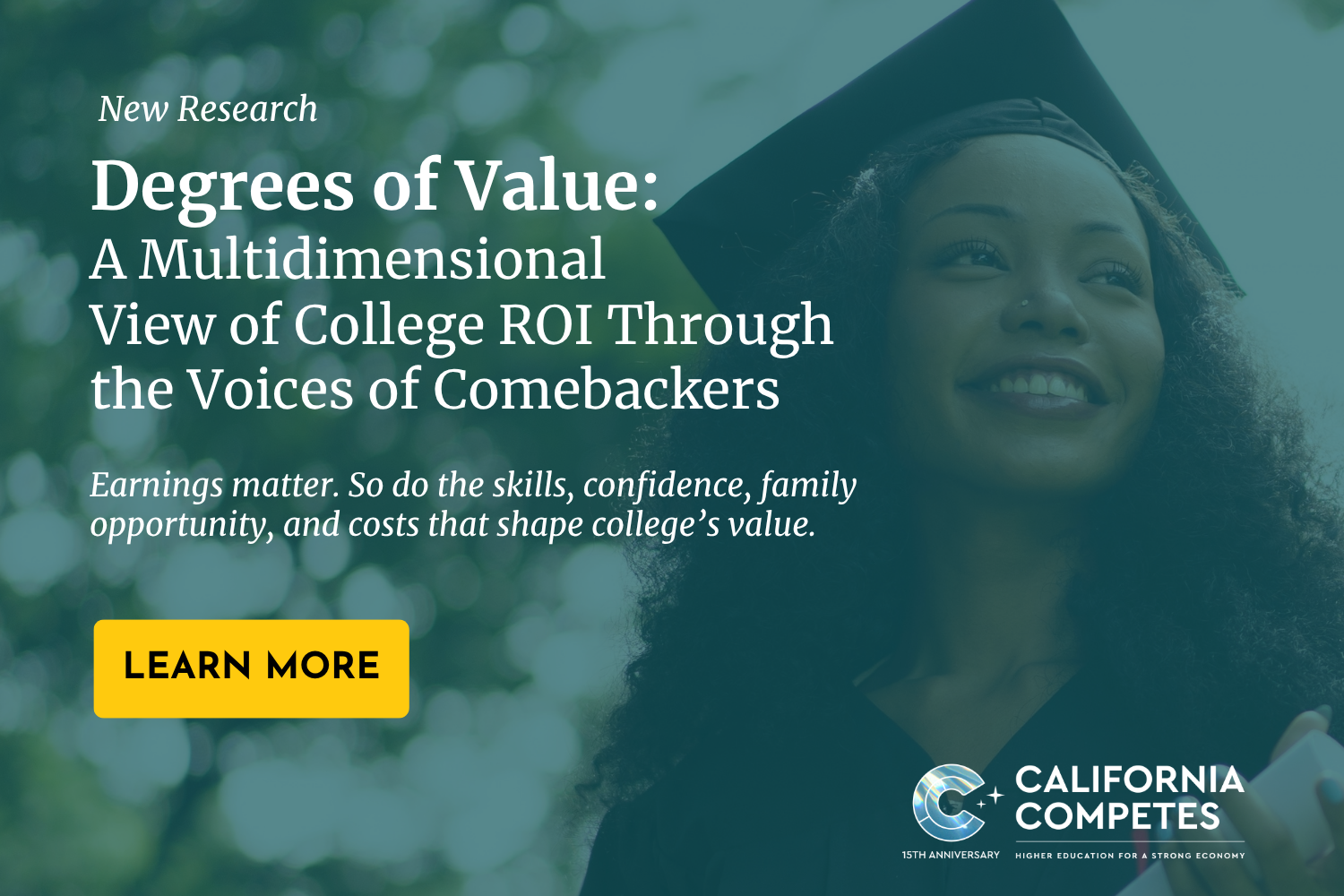
Degrees of Value: A Multidimensional View of College ROI Through the Voices of Comebackers
What does college return on investment look like when we consider more than earnings alone and center the experiences of adult learners who paused their education and later returned to complete their degrees? New research from California Competes finds that the value of college includes personal and social benefits in addition to financial benefits, weighed against the financial, opportunity, and personal costs of attending. This research draws on interviews with comebacker graduates (students who stopped out and later returned and completed college).

EdTrust-West
Growing Together: Fostering Belonging for Parenting Students at California State University
This brief examines the experiences of parenting students across the California State University system, highlighting gaps in campus support and belonging. It offers five evidence-based recommendations for creating more family-friendly campuses, including flexible course options, dedicated spaces, and stronger awareness of available resources.

California Competes
Untapped Opportunity: Meet California’s 6.4 Million Potential Graduates
California is home to over 6 million adults ages 25 to 54 with a high school diploma but no college degree. This analysis examines who they are along with the barriers and opportunities shaping their path to college completion, economic mobility, and career advancement.

California Competes
From Setback to Success: Meeting Comebackers Where They Are
More than 6 million Californians ages 25 to 64 have some college experience but no credential. Drawing on interviews with comebacker students and lessons from a community of practice, this report identifies recommendations for helping adults reenroll, complete a credential, and navigate a higher education system built for today’s learners.

California Competes
Get Ready, California
Forthcoming research explores the demand for college among working-age adults, including how and where prospective learners want to study. With 6.8 million adults planning to enroll in college or pursue further education and training within the next two years, the findings can help California build flexible, affordable, and accessible pathways that connect more learners to opportunity.
COMING SOON

Guild
The Talent Resilience Index: Workforce Mobility as a Critical Measure of Competitiveness
Guild and Lightcast introduce the Talent Resilience Index, a new measure of workforce mobility and adaptability across the U.S. labor market. The report examines resilient jobs and skills, mobility trends, and the forces shaping workforce resilience, offering strategies for business leaders, policymakers, and workers.

guild
From Approval to Alignment: A New Standard for Public Workforce Training
This report examines the gap between public workforce training programs and the occupations employers need, drawing on analysis across 14 states. It highlights emerging state approaches and outlines opportunities for states, the U.S. Department of Labor, and Congress to make workforce training more responsive to changing labor market demand.
Californians Deserve Credit
A Movement to Make College Credit Work Better for Californians
This resource explores how recognizing learning gained through work and life—including through credit for prior learning and competency-based education—can help more Californians earn degrees and credentials while making higher education more flexible and accessible.

TICAS
Untapped Opportunities: Boosting Financial Aid Uptake for Californians of All Ages
California has made strides in financial aid application completion, but too many students still miss out on aid for which they qualify. This analysis finds that about 137,000 California Community College students who were likely eligible for Pell Grants but did not apply could have accessed up to $534 million in Pell funds in 2019–20. The report explores who these students are and strategies for increasing aid access.

TICAS
Financial Aid for Workforce Programs: Building a California Model
This brief offers a comprehensive comparison of Workforce Pell and Cal Grant C program structure, eligibility, and reporting, as well as considerations for implementation and reform. As California policymakers consider how these two aid sources interact, we provide student-centered recommendations to advance program quality, ensure fiscal responsibility, and expand workforce and educational opportunities for future recipients.

TICAS + California Competes
Workforce Pell as an Avenue for Higher Education Modernization in California
This blog from California Competes and The Institute for College Access & Success explores how California can leverage Workforce Pell implementation to strengthen its higher education and workforce systems.

SOVA
The New Learning Contract: California's Path to Direct Assessment Competency-Based Education
This report explores how California can build higher education systems that better reflect the realities of today’s working adults and a skills-driven economy. Drawing on conversations with faculty, higher education leaders and researchers, it examines opportunities and barriers across system design, credentials, technology, employment integration and funding—and outlines what California needs to build equitable learning and mobility at scale.

SOVA
The New Learning Contract:
Learning as the Organizing Principle
This companion brief is the first in a series accompanying The New Learning Contract: California’s Path to Direct Assessment Competency-Based Education. It makes a foundational argument: that learning, not course completion, must be the organizing logic of higher education. The brief examines what that shift requires in practice, including how we assess competence, how faculty work is structured, and how prior learning gets recognized consistently across the system. Centering learning, the brief argues, is where the work of transformation begins.

SOVA
The New Learning Contract: Career Mobility and Employment Trajectories
In the second companion brief to The New Learning Contract: California’s Path to Direct Assessment Competency-Based Education, Sova explores how workforce education systems can better support long-term career mobility in a rapidly changing labor market. Rather than focusing on current employer demand, it advances a trajectory-oriented approach centered on learners’ career progression, wage growth, and lifelong adaptability. The brief examines how direct assessment competency-based education can support this shift by recognizing demonstrated competencies, valuing learning wherever it occurs, and providing learners with portable records of achievement. It also highlights implications for policy and practice, including new approaches to measuring outcomes, engaging employers, and supporting mobility across jobs, industries, and stages of life.

The California Alliance for Student Parent Success
Juggling Roles and Achieving Goals: The California Student Parents Almanac
Student parents balance academics, work, and family responsibilities, yet gaps in data often leave their experiences and needs overlooked. This report uses federal data to examine who California student parents are, their educational and financial circumstances, and the barriers they encounter on the path to a credential.
The California Alliance for Student Parent Success
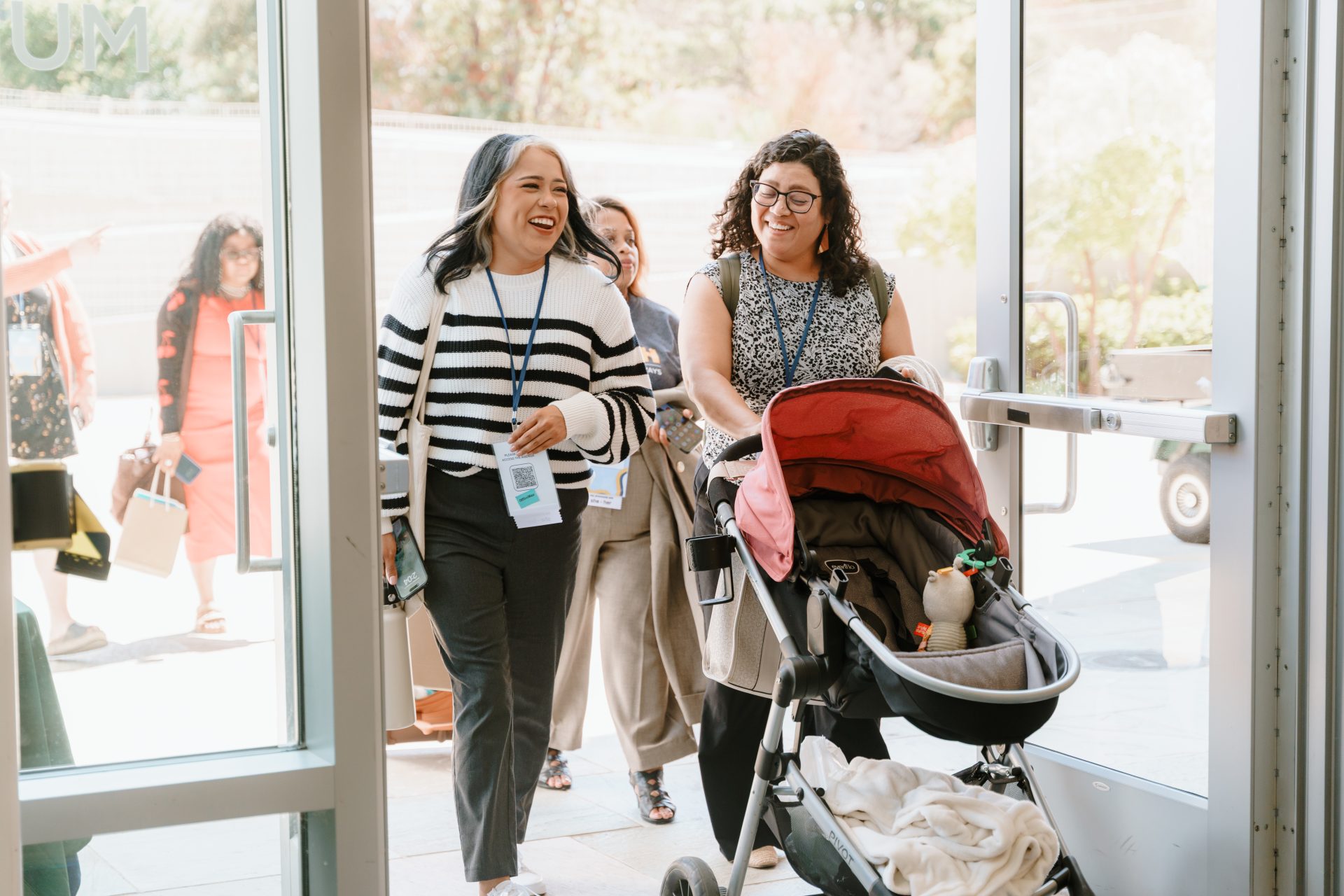
Bring Your Kid to College Day Toolkit
A practical toolkit to help colleges create family-friendly events that welcome student parents and their children, build belonging, and raise awareness of the experiences and needs of student parents.
The California Alliance for Student Parent Success
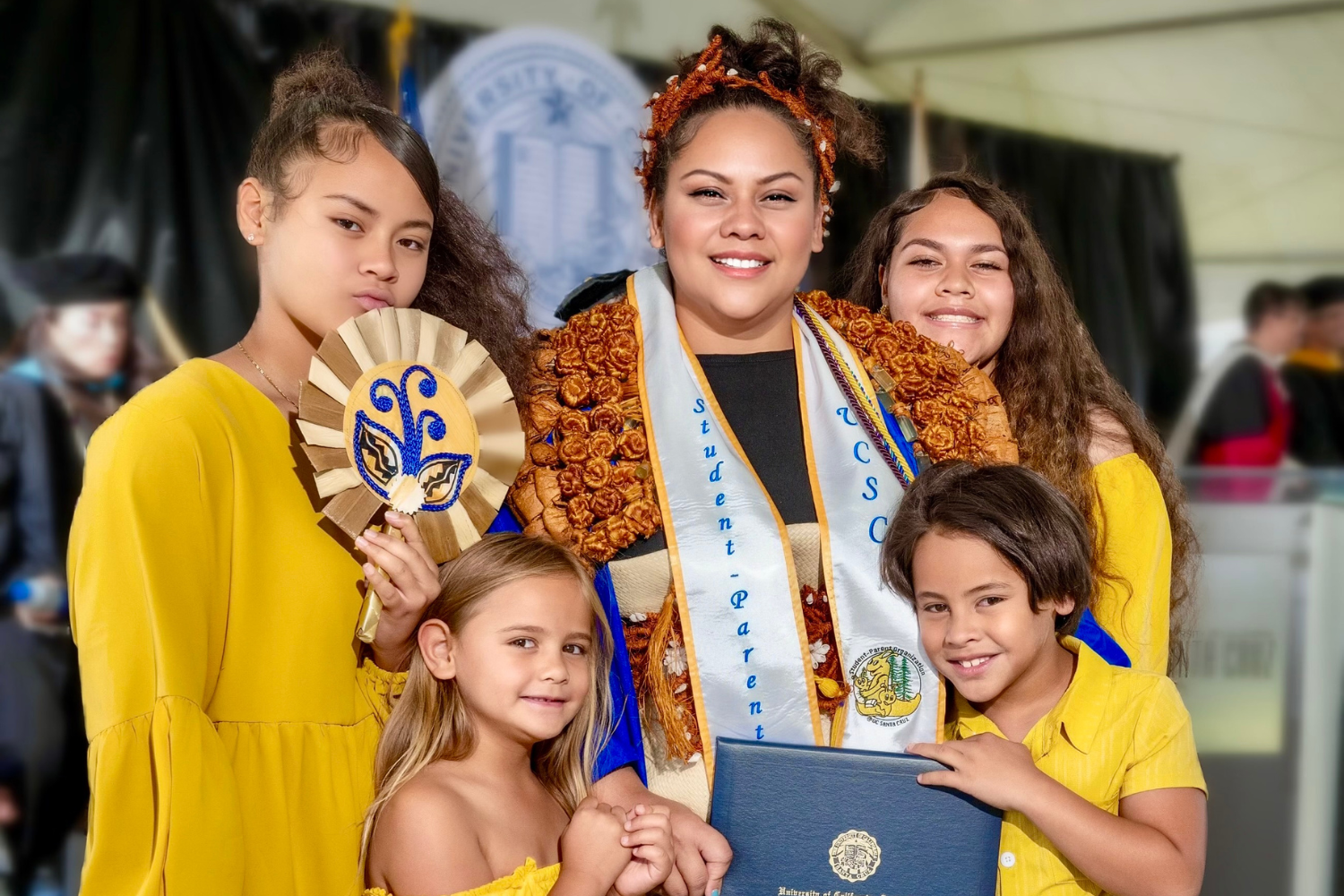
Advocates Amplified: A Series Elevating Student Parents and Allies
This blog and op-ed series shares the experiences of student parents and their allies in their own voices. The aim is to help keep changemakers grounded in what matters most to student parents and the supports that advance their academic success and well-being, helping build stronger pathways to multigenerational success.

The California Alliance for Student Parent Success
Supporting Students Who Support Families: Reducing Barriers to Financial Aid
This infographic highlights the experiences and needs of California students who are also supporting children and other family members. It underscores the importance of recognizing student parents and caregivers and strengthening campus policies, resources, and supports to help them succeed.
The California Alliance for Student Parent Success
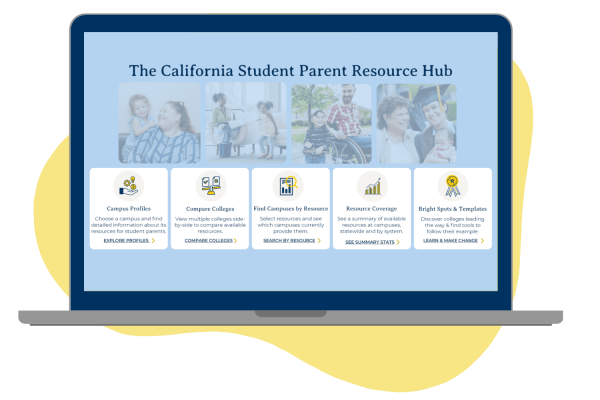
Helping California Working Learners Access Campus Resources
The Student Parent Resource Hub is a one-stop tool for finding and comparing supports at California’s public colleges and universities, including child care, child-friendly study spaces, student parent groups, and food pantries.
california partnership for adult learner success
Insights from the California Partnership for Adult Learner Success (C-PALS)
California Partnership for Adult Learner Success (C-PALS) is a coordinated effort among postsecondary institutions and nonprofit organizations focused on supporting adults, particularly those with some college but no credential, in achieving their educational goals. Explore C-PALS perspectives, resources, and promising practices for advancing systems change that will propel adult learners to completion, close equity gaps, and meet workforce needs.
Transfer nation California
Workforce Pell’s Real Test Isn’t Access. It’s What Happens Next
Published in Inside Higher Ed during #CAWorkingLearnerWeek, Workforce Pell’s Real Test Isn’t Access. It’s What Happens Next. explores what it will take for short-term workforce credentials to deliver lasting value for students balancing education, work, and life. Co-authored by Brianna Huynh, a member of Transfer Nation California’s Learner Advisory Board, the article draws on lessons from the transfer experience to challenge the assumption that credentials labeled portable and stackable will necessarily help learners advance. At its heart is a question especially relevant to working learners — how do we ensure that the time, money, and effort they invest in learning continue to count as they move between jobs, institutions, and educational opportunities?
Publishing new research or insights related to working learners?
Learn how to participate in California Working Learner Week.